Bodies Matter LUCAS Conference Attendance

On April 15, I shared a presentation with my colleague Mireia Pérez-Carretero on the challenges for the representation of disappeared individuals in press and literature. We explored the ways in which a community puts forward their bodies as proxies for their missing loved ones can make visible the injustice of the disappearances, provide affective means to deal with trauma, and position the crimes within a system of multi-leveled oppressions. We discussed the treatment of the 43 missing students from Ayotzinapa as our case study.

Our presentation was part of a fantastic and quite daring seminar that explored the theme of the body from many different contemporary approaches. It was beautifully organized by the Leiden University Center for the Arts and Sciences. Unfortunately, it wasn’t recorded, but there are talks of compiling an edited volume. Let’s hope that the project blooms.
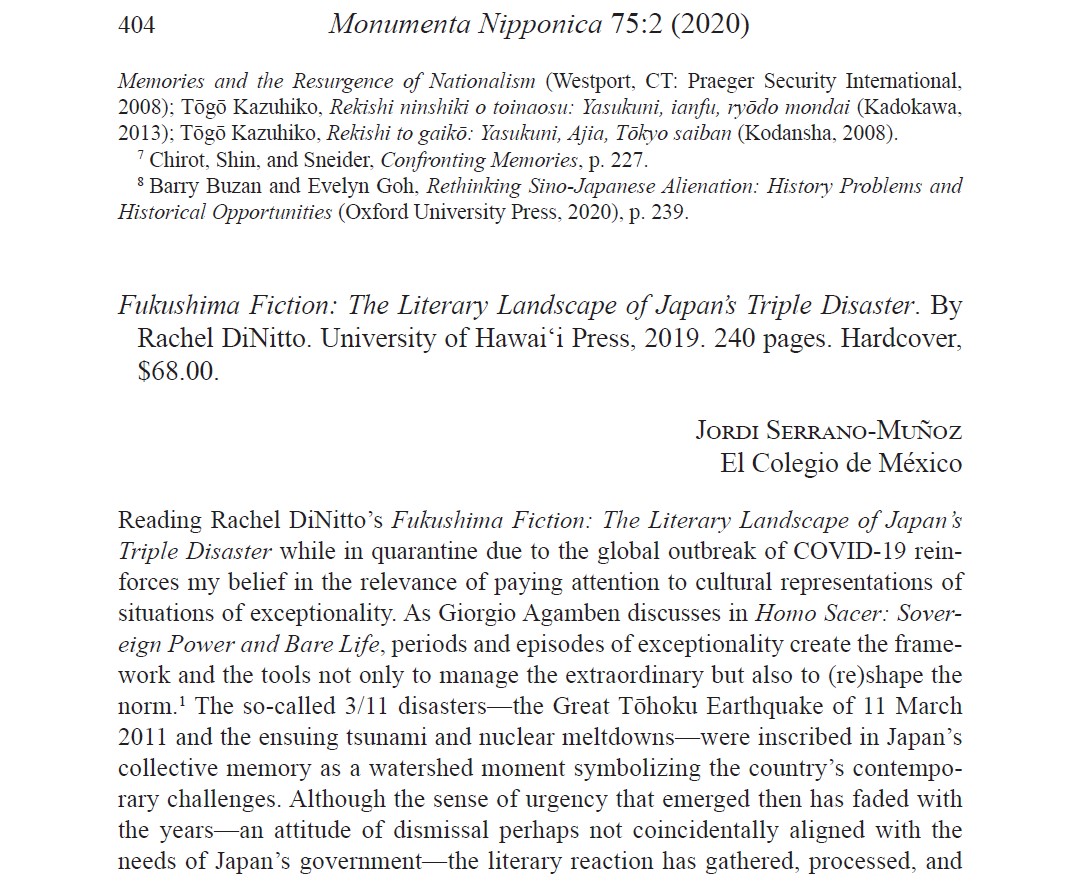
Review in Monumenta Nipponica: “Fukushima Fiction: The Literary Landscape of Japan’s Triple Disaster. By Rachel DiNitto”

My recent review of Fukushima Fiction: The Literary Landscape of Japan’s Triple Disaster, written by Rachel DiNitto, has just been published by Monumenta Nipponica. For now, it can only be checked if you have a subscription to the journal in Project Muse (see here) and if you find the work close to your interests, acquire the book from the publisher or from a trusted bookseller. Happy reading!

NeMLA 2021 Panel Attendance

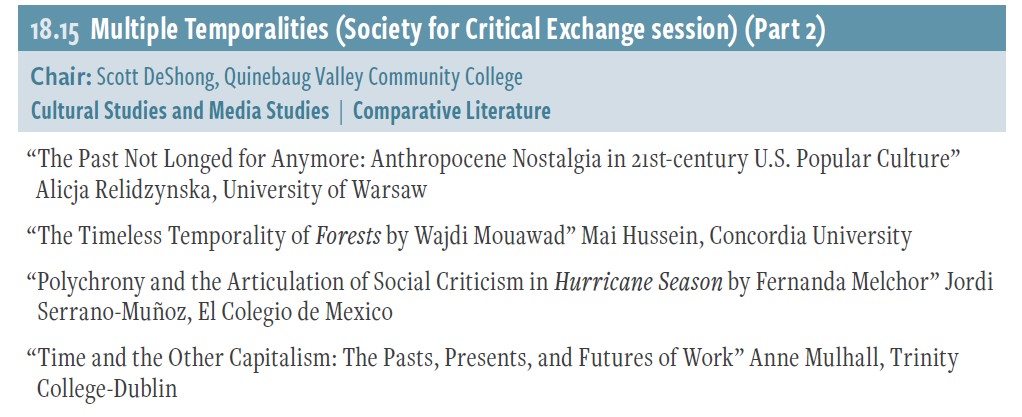
I participated last Friday 12th of March, 2021, at the 52nd Annual Convention of the Northeast Modern Language Association, this time held online, with a presentation on how Fernanda Melchor’s use of multiple voices, times, and spaces in her novel Hurricane Season helps promote an understanding of crimes as systemic instead of as isolated events. It was a great chance to discuss the way we articulate diegetic time affects the political connotations of a literary work.

If you attended NeMLA too, the session with the rest of the fantastic panelists was recorded and will be available for 6 months at the venue’s platform.

Panel on Transpacific Studies and Decolonial Struggles is online

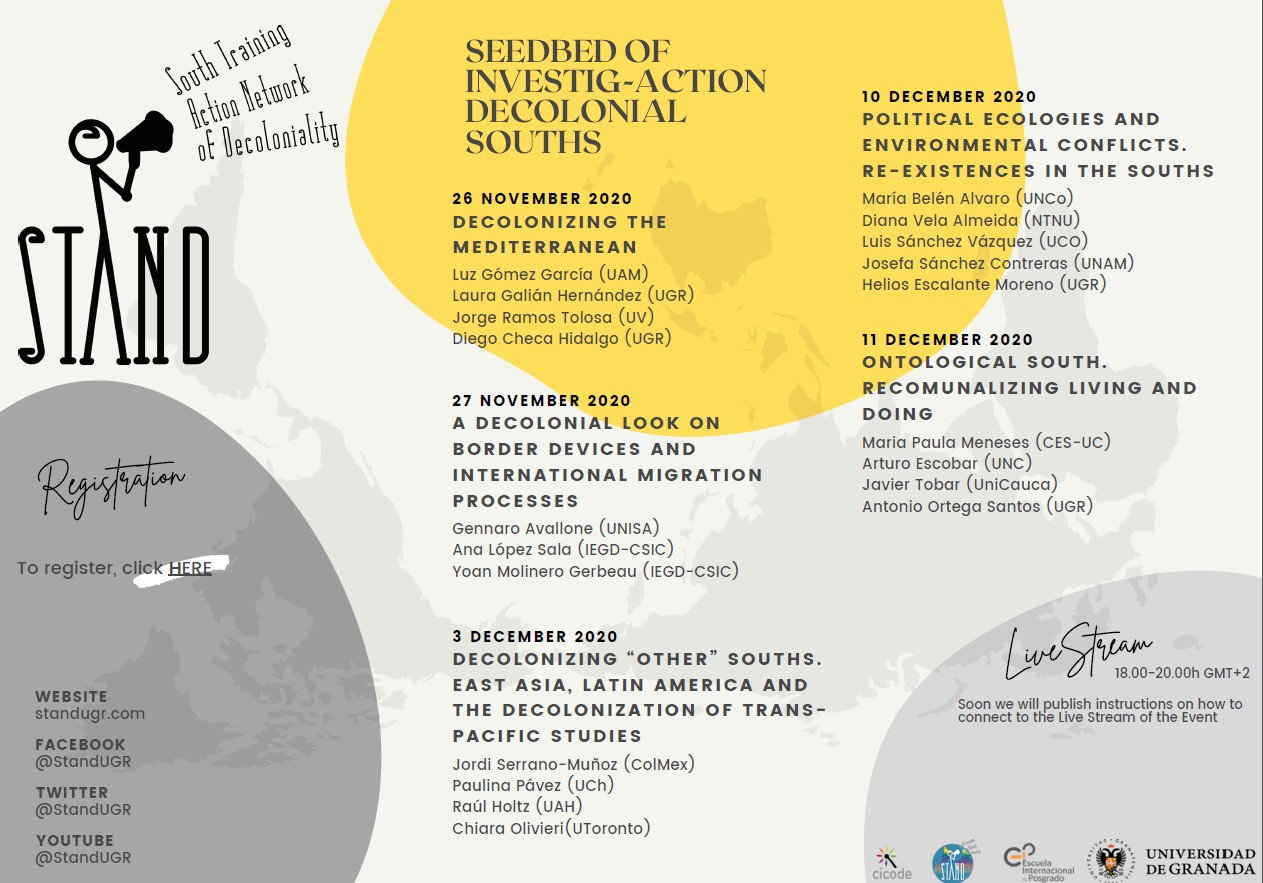
On December 3, 2020, I had the honor of sharing a panel with my dear colleagues Chiara Olivieri, Paulina Pavez, and Raúl Holz at the University of Granada as part of the cicle of seminars on decolonial theory and activism organized by the research group Stand UGR. We discussed questions regarding the decolonization of transpacific studies. My participation revolved around epistemological questions, with a few hints at things we must take into account if we wish to engage with transpacific comparative literature.

It is available online at Stand UGR’s Youtube channel. It is in Spanish.

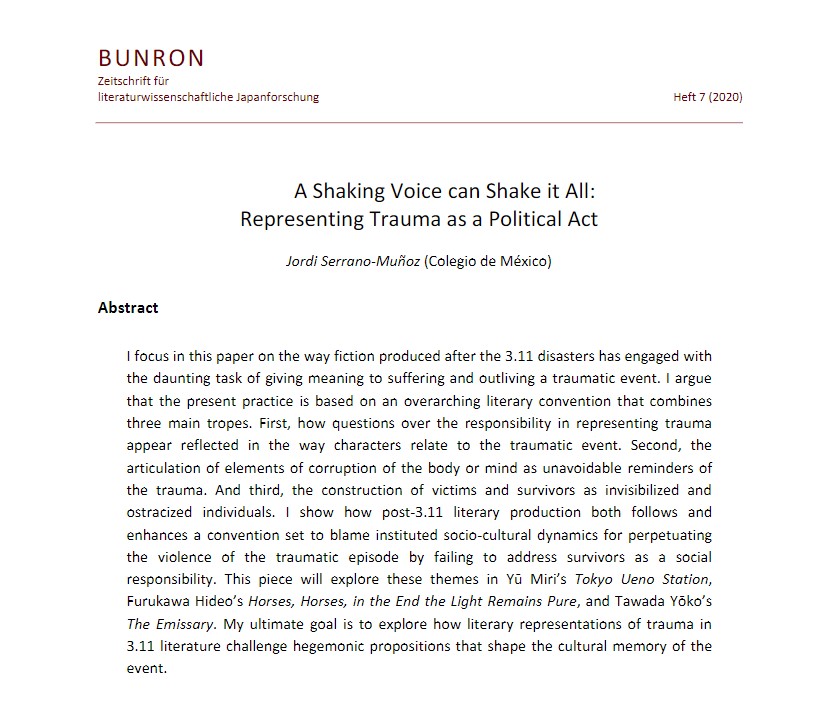
Article: “A Shaking Voice can Shake it All: Representing Trauma as a Political Act”

I am delighted to announce that my latest article “A Shaking Voice can Shake it All: Representing Trauma as a Political Act” has been published in the academic journal Bunron. In it, I explore how literary production that appeared after the triple disaster of 3.11 has engaged with the challenging task of giving meaning to trauma. I base my study particularly on three works: Yū Miri’s Tokyo Ueno Station, Furukawa Hideo’s Horses, Horses, in the End the Light Remains Pure, and Tawada Yōko’s The Emissary.

You can read the article here.

Who is Afraid of the Waking Red? Review of Revolution Goes East by Tatiana Linkhoeva

My review of Tatiana Linkhoeva’s fantastic book Revolution Goes East has been published by Revista Paz y Conflictos. You can check out my article here and if you find her work strikes your interests, acquire the book from the publisher or from a trusted bookseller. Happy reading!

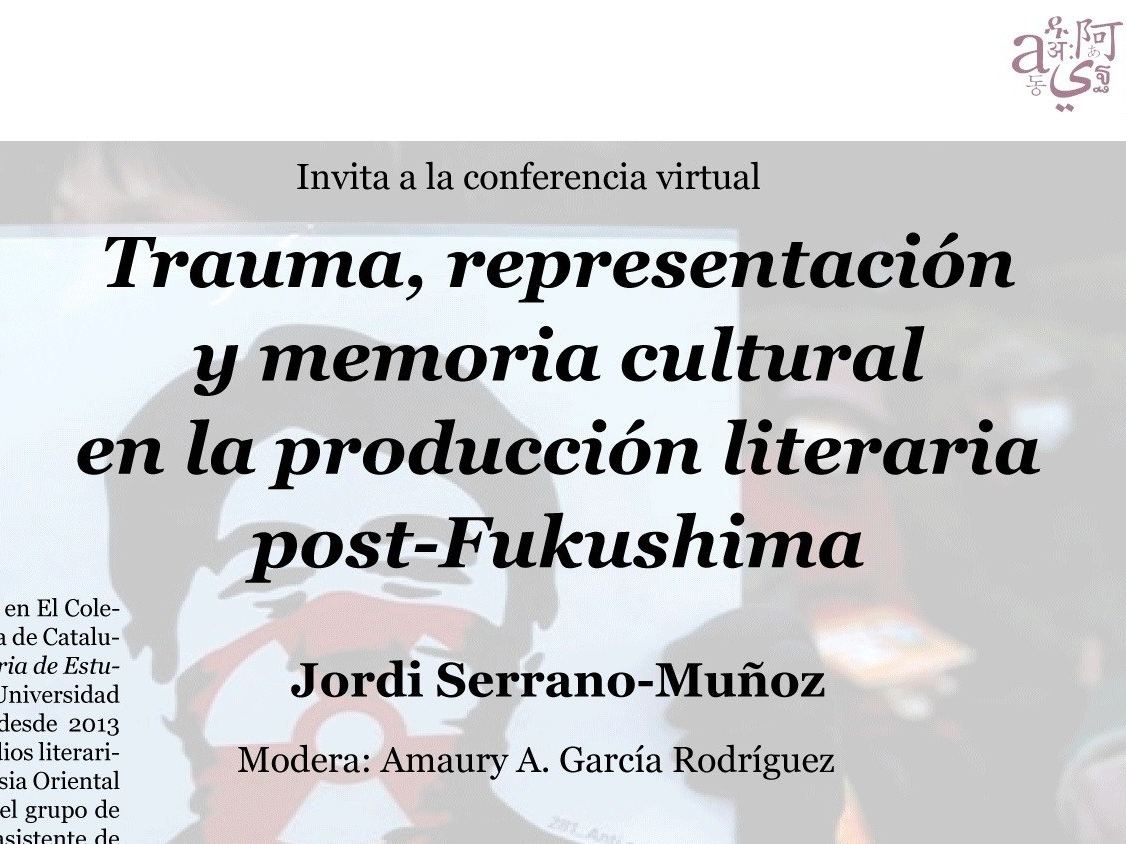
My lecture on post-3/11 literature is available online

On May 28, I gave an online lecture on trauma, cultural memory, and literature produced after and in its relationship with the triple disaster of Japan that happened on March 11, 2011. It is now available on Youtube, but please keep in mind that it’s in Spanish. I would like to thank again the CEAA for hosting this event and the participants for their amazing questions and contributions.