
Climate stories overwhelmingly centre on disasters, such as floods, fires, hurricanes, or droughts, to imagine both sudden and gradual processes of environmental destruction and ecosystem collapse. Disaster Distortion reveals that this narrative choice has profound implications in shaping what readers can imagine about climate futures and possible responses of mitigation and adaptation.
This project introduces a framework for analyzing how catastrophic thinking influences the imagination of the climate crisis across three levels:
- The rupture foundational expectations: disaster changes what counts as “normal”, shifting the baseline of expectations of business as usual. Catastrophic events suggest stark and sudden impacts for changes, while stories of slow collapse challenge attempts to establish a before or an after things stopped being the same.
- The warping of narrative form: Disasters condition in fiction questions like temporal ordering, spatial scope, representation of affected subjects, and the reliability of stable realities.
- The constraining or expansion of what becomes imaginable: Because narrative form shapes political imagination, understanding the distortion disasters inflict on narratives reveals both what is and isn’t imagined – and why.
This project explores how the placement of disasters in stories as either foregrounded events – the earthquake, the tsunami, the wildfires – and backgrounded processes – desertification, loss of biodiversity, rise in sea levels – either narrows or expands climate imagination.
Through close analysis of contemporary fiction from Japan, Mexico, and Australia, Disaster Distortion offers a systematic framework for understanding how narrative shapes the relationship between catastrophic imagination and the climate crisis.
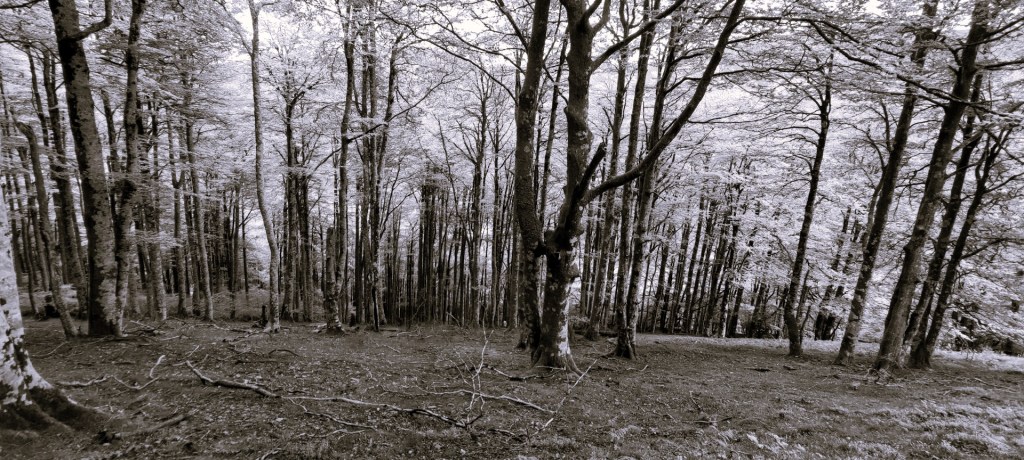
Public Lectures and Activities
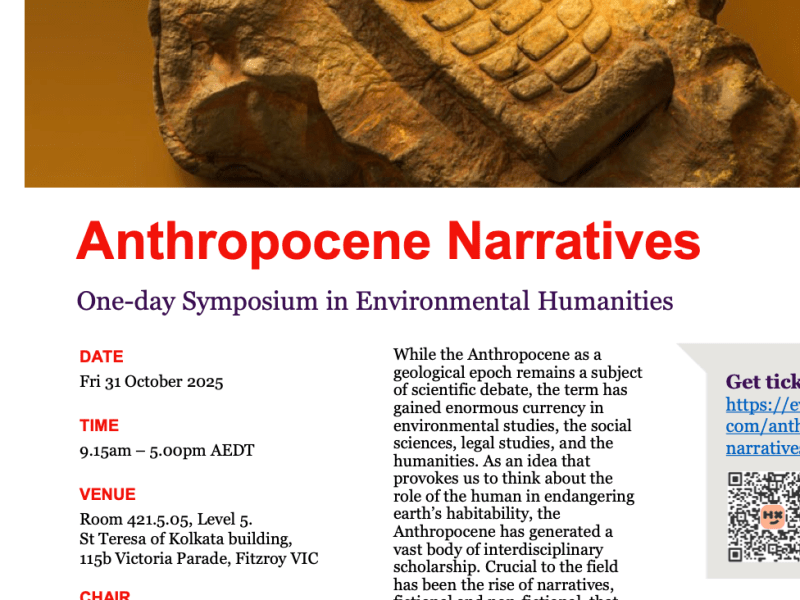
Melbourne research stay
The third and last research stay of the year, the one that closed the circle opened in February in Mexico and followed in June in Tokyo, brought me to Melbourne at the invitation of Debjani Ganguly and Killian Quigley from the Institute of Humanities at ACU. I spent the month of October happily shifting between…
Keep reading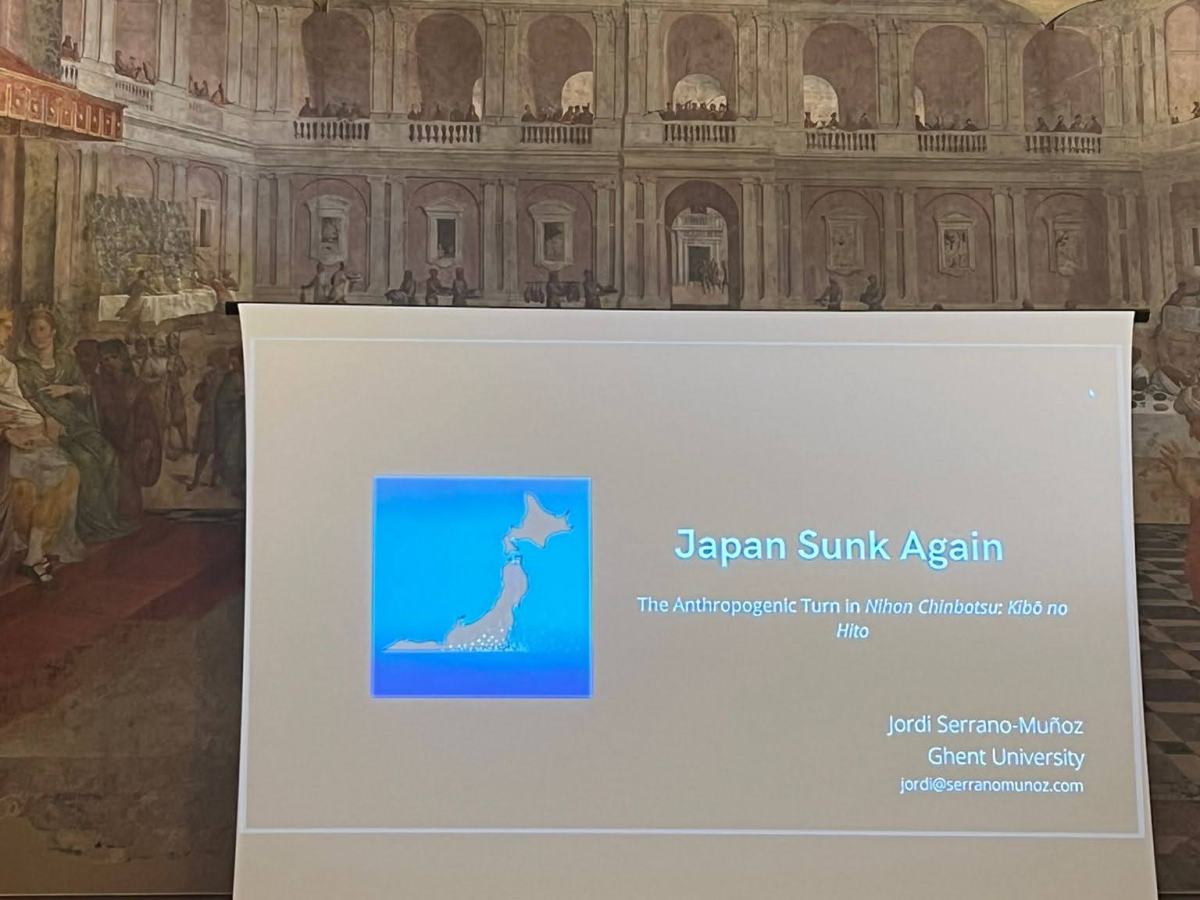
Summer activities 2025
This has been a very prolific and exciting summer, which started at the end of Spring and has been filled with different public activities: workshops, conferences, and symposia. As mentioned in the previous post, in May I joined Chiara Xausa and Marco Caracciolo for a workshop at Ghent University on ecofeminism, as part of the…
Keep reading
Ecofeminist panel at Ghent University Spring 2025
Springtime 2025 in Ghent has been marked by a lot of emphasis on setting up the analytical framework of the project, testing the methodological setup of thematic comparative analysis through empirical stress-testing and some valuable help from my colleagues at the department, and preparing some texts on these initial outcomes, hopefully to be published once…
Keep readingSomething went wrong. Please refresh the page and/or try again.
Publications
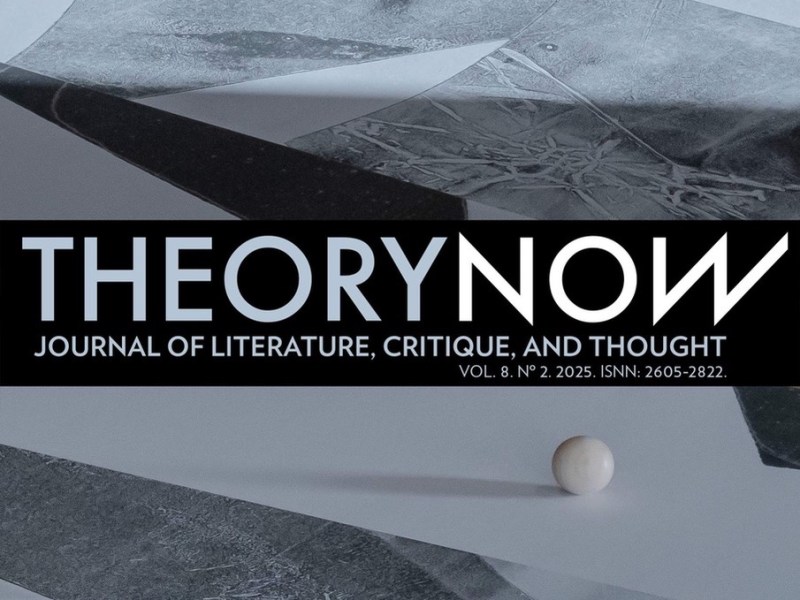
New Publication! Editor for the Special Issue Cli-Fi as Dystopia, Utopia, or Realism, in Theory Now
I am thrilled to announce that the special issue I have edited for Theory Now called “Cli-Fi as Dystopia, Utopia, or Realism: Understanding the Challenges of Imagining the Climate Crisis” is now available to read in full open access through their website! In this issue, you will find very exciting works from a diverse range…
Keep reading
CfP Theory Now: Cli-Fi as Dystopia, Utopia, or Realism: Understanding the Challenges of Imagining the Climate Crisis
I am editing a special issue on Cli-Fi for the journal Theory Now, to be published in summer 2025. Here are the details: Submissions until December 1, 2024. Please ensure that submissions are sent to the guest editor (jordi@serranomunoz.com) and uploaded simultaneously to the platform. In a time when the specter of environmental catastrophe is…
Keep reading


This project is funded by a MSCA Grant and carried out between 2025 and 2027 at Ghent University.
Views and opinions expressed are however those of the author(s) only and do not necessarily reflect those of the European Union or the European Page | 8 V. 2024/09/12 Guidelines for MSCA-PF projects Research Executive Agency (REA). Neither the European Union nor the granting authority can be held responsible for them
 Jordi Serrano-Muñoz